How to develop guards adapted to the geometry of an existing vehicle? In this project, 3D scanning of a van forms the starting point for the design of new protection plates. The work is organised in two phases: capture of the geometric data and development by reverse engineering, using the collected geometry as reference.
The solution or technology
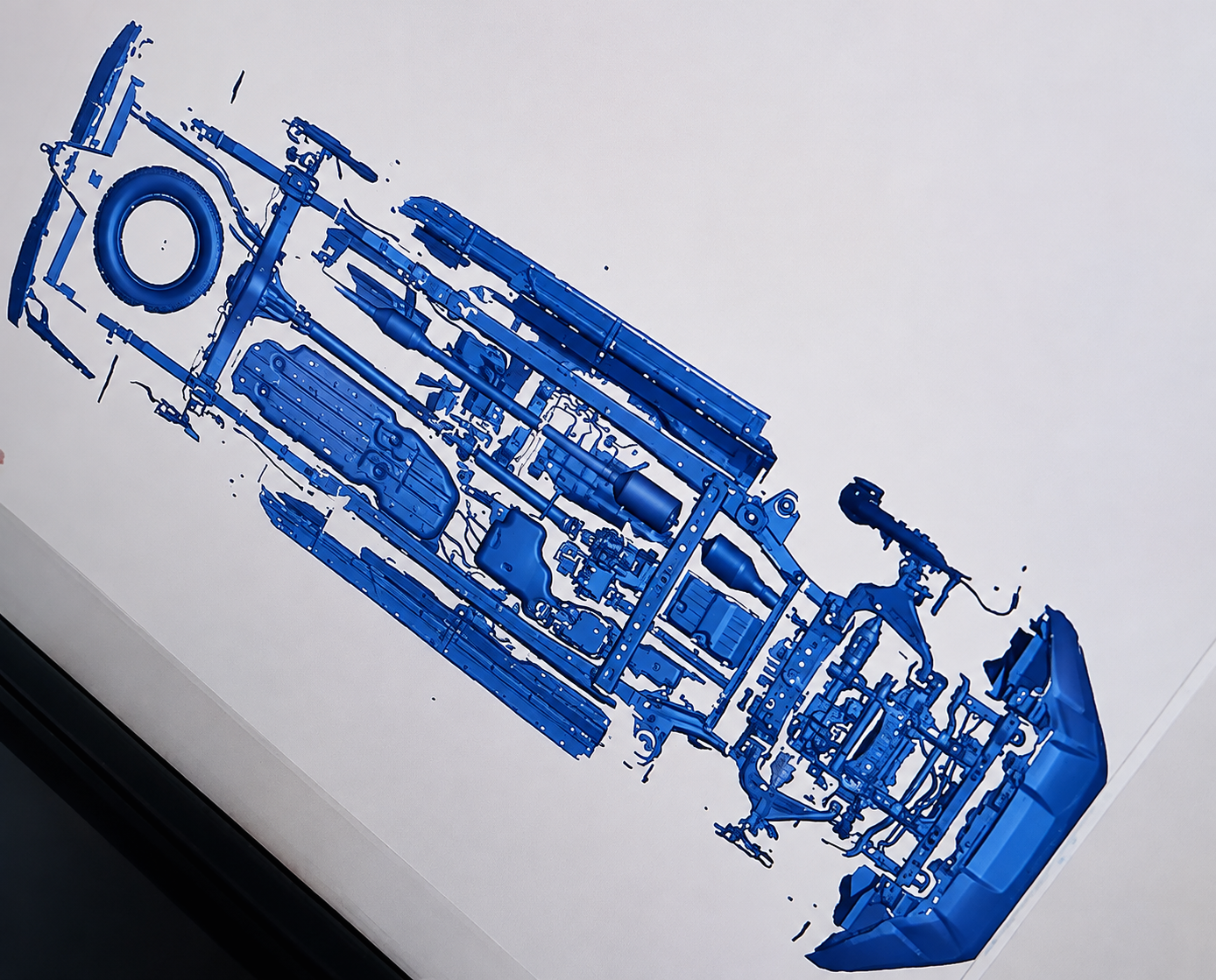
The first phase took place at the client’s premises and is practically complete. It consisted of capturing the van’s geometric data, which will serve as the basis for the development work. The next planned step is optimisation of the digital file before the data are used as reference for the design of the guards.
In the second phase, reverse engineering will continue the process of developing components tailored to the vehicle. The project summary foresees new protection plates by additive manufacturing, designed from the existing geometry. The sequence thus distinguishes the collection of geometric information from the subsequent design work: the scanning is practically complete, while development of the new guards corresponds to the next stage.
Industrial applications
An application focused on customised guards
The documented application is the development of protection plates for a van. The technical interest lies in using the vehicle’s own geometric data to guide the design. In this context, scanning is a step in product development, linked to the subsequent reverse engineering work.
The case allows following the transition from a physical object to a digital reference intended to support new components. However, it does not document an already installed solution nor a guard tested in service. It also does not permit extending the application to other vehicles, equipment or operating conditions without additional information.
How NM3D can help
How to approach a project with NM3D
If you intend to develop components adapted to an existing geometry, you can submit the requirement to NM3D via the 3D scanning services page. To frame the request, indicate the object to be scanned, the relevant areas and the intended use of the data. These elements help to define the scope of the technical conversation without presupposing the solution to be adopted.
It is also advisable to clarify whether the request ends with geometric data collection or includes subsequent development. The project described here distinguishes those two phases. The scope of any new work, deliverables and execution conditions should be confirmed directly with the team.
Related content at NM3D: 3D scanning services for geometry capture; 3D printing and prototyping.