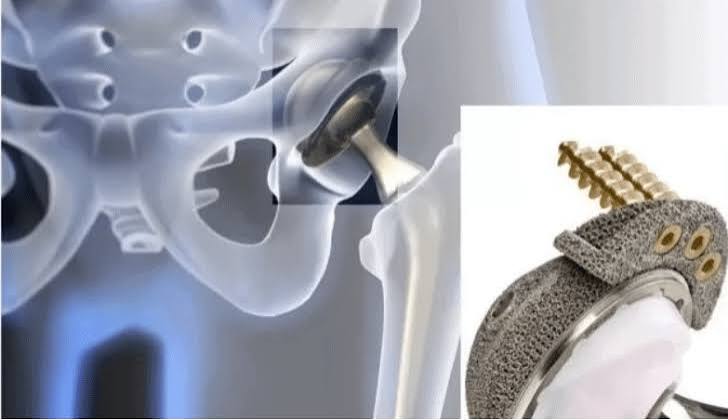
Patient safety depends on the dimensional compliance of medical devices. Orthopedic implants, surgical instruments, catheters, inhalers and diagnostic systems face increasingly stringent tolerances, while design complexity rises and production volumes demand efficiency without compromising metrology.
Context and challenge
As the medical industry advances toward miniaturized geometries and sensitive materials, traditional contact inspection shows limitations. Components such as flexible tubing, contact lenses, microscopic springs and rubber parts deform under mechanical touch. Holes, radii, slots and micro-features require methods that preserve surface integrity and ensure full traceability.
The challenge is to reconcile inspection speed with dimensional rigor, especially as production batches grow and regulatory documentation becomes more demanding. Vision metrology addresses this balance with programmable illumination, advanced optics and automated measurement routines.
The solution or technology
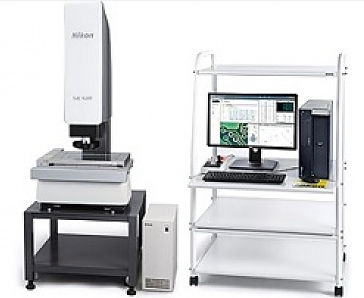
Vision measurement systems, such as the NEXIV series equipment developed by the manufacturer Nikon, combine intelligent illumination with high-resolution optics to inspect components without physical contact. The technology enables evaluation of critical dimensions in delicate parts, from dental implants to optical components, preserving the surface and ensuring repeatability.
These systems integrate automated measurement routines that reduce operator variability and accelerate batch validation. The modular architecture adapts to different workloads, from prototyping to serial production, while maintaining full traceability of acquired data.
Industrial applications
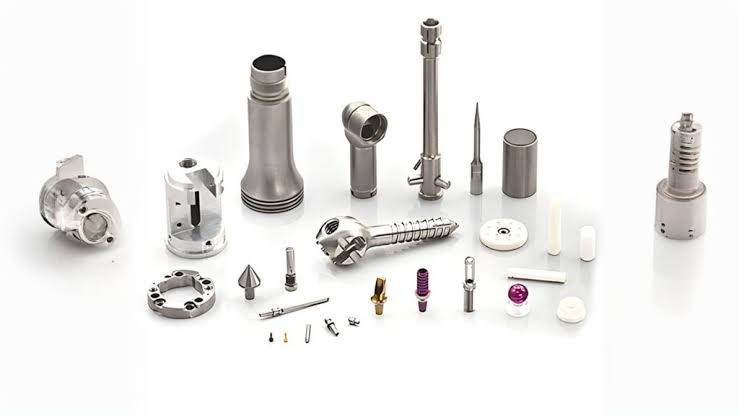
Non-contact optical measurement applies to several families of medical devices:
- Inspection of components for implantable devices and surgical instruments, where the risk of contamination must be eliminated.
- Dimensional evaluation of dental implants, including threads, chamfers and fixation surfaces.
- Control of catheters, extruded tubing and rubber components, whose flexibility prevents contact measurement.
- Verification of contact lenses and optical elements, where flatness and curvature require non-invasive methods.
- Analysis of springs, clamps and micro-components, with features below 0,1 mm.
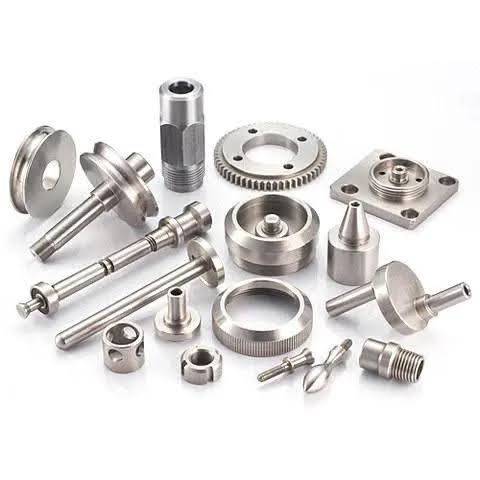
- Documentation of holes, radii, slots and complex geometries for regulatory compliance reports.
Results and benefits
Vision measurement offers verifiable advantages in medical environments:
- Elimination of mechanical deformation in soft materials or fragile components.
- Reduction of inspection cycle time through automated routines and quick program changeover.
- Complete digital traceability, facilitating audits and process validation according to ISO 13485.
- Dimensional repeatability that minimizes variability between shifts and operators.
- Capability to inspect micro-features and three-dimensional geometries without special part preparation.
How NM3D can help
NM3D Ibérica provides comprehensive technical support to implement vision metrology in medical manufacturing environments. The team assesses dimensional requirements, selects suitable optical configurations and develops measurement routines aligned with existing production flows.
Support includes operator training, periodic system calibration and local technical assistance. NM3D ensures that collected metrological data meet the traceability criteria required by regulatory bodies, supporting activities from prototype qualification to statistical process control in series production.
Related content on NM3D: industrial vision measurement systems; optical dimensional inspection services; calibration and maintenance of metrology equipment.
Would you like to assess this solution for your application?
Discover how optical measurement can improve the dimensional control of your medical devices. Contact the NM3D team for a technical analysis of your metrological needs.