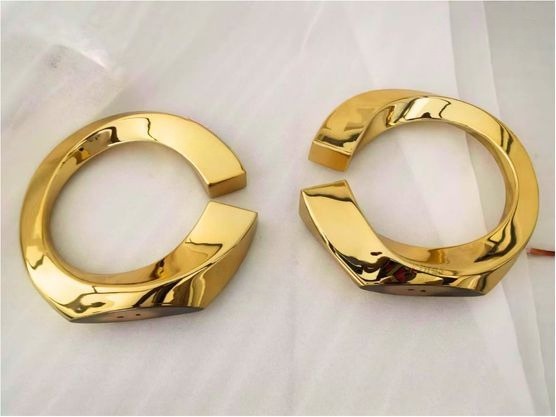
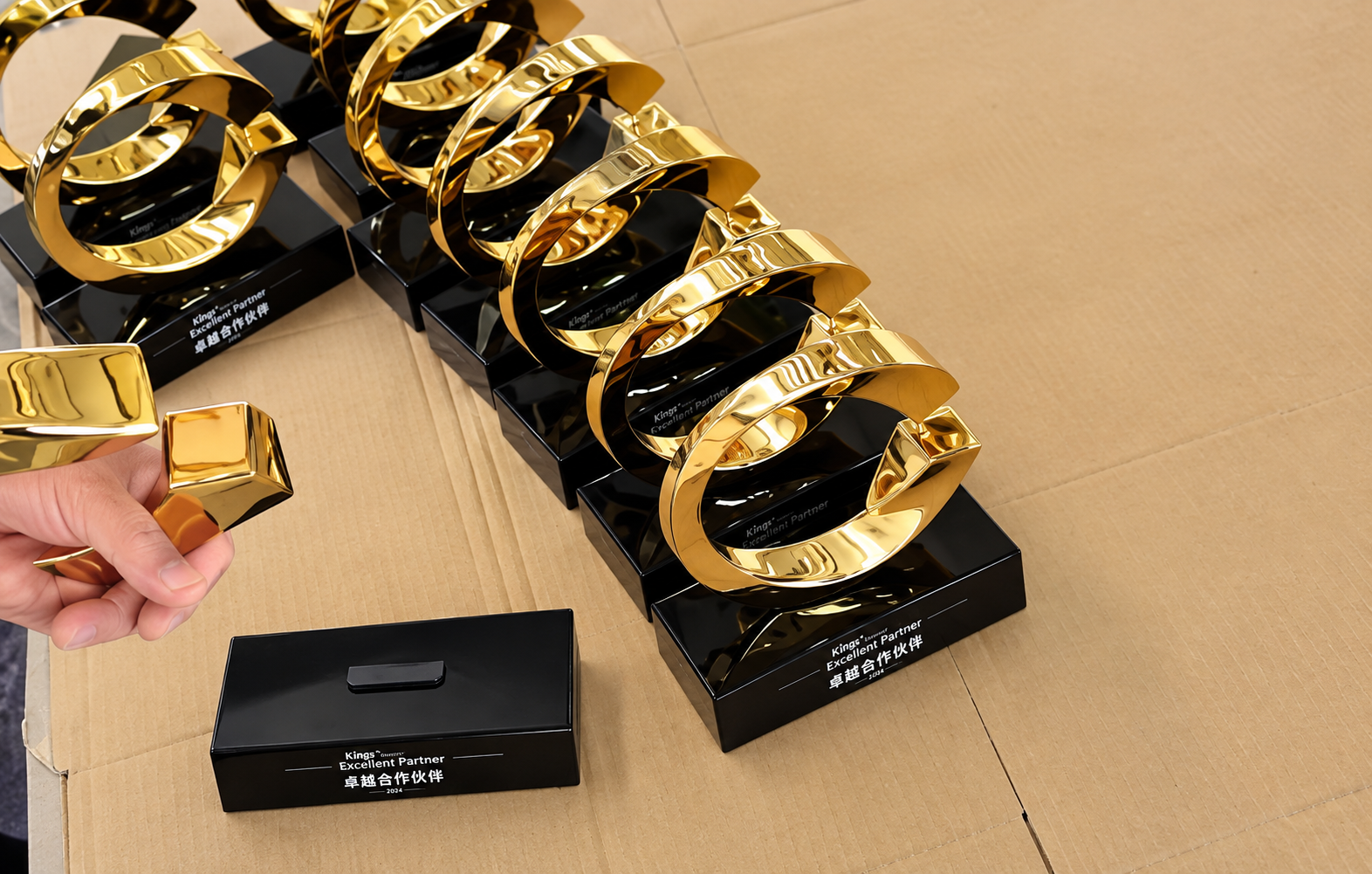
The production of custom trophies requires geometric fidelity, superior surface finish and a metallic appearance. A recent project used stereolithography (SLA) combined with electroplating to manufacture a batch of high-end trophies, demonstrating that resin printing can reproduce complex shapes and fine details while maintaining a smooth surface.
Context and challenge
Stereolithography cures photopolymeric resin layer by layer using ultraviolet light, resulting in high dimensional resolution and a naturally smoother finish than filament-based technologies. This characteristic makes the process suitable for presentation pieces, functional prototypes and small series where the final appearance is decisive.
The manufacture of trophies and decorative objects presents specific requirements: organic geometries, detailed textures, tight tolerances and the ability to apply metallic surface treatments. The quality of the printed surface directly influences the electroplating result, as any irregularity is amplified by the metal coating.
The solution or technology
In the cited project, parts were printed on industrial SLA and then electroplated. The technology replicated fine details and complex shapes with precision, while the smooth surface minimized visible layer lines. After electrochemical metal deposition, the trophies achieved the intended metallic appearance, with good coating adhesion and a professional finish.
The workflow integrates printing, post-curing, surface preparation and electroplating. Careful selection of resin and printing parameters is decisive to ensure metal adhesion and dimensional stability of the final part.
Industrial applications
Beyond trophies, the combination of SLA and electroplating applies to:
- Design prototypes for aesthetic validation before metal production
- Decorative components for interiors and exhibition stands
- Low-volume forming tools with a metallic surface
- Functional parts that require electrical conductivity or surface protection
- Master models for lost-wax casting
Results and benefits
Using stereolithography with electroplating offers measurable advantages:
- Reduced production time compared with traditional machining or injection molding for small quantities
- Geometric freedom for shapes that would be difficult or impossible to machine
- Surface finish that eliminates intensive polishing operations prior to metallization
- Cost-effectiveness for single units or small series, without the need for dedicated tooling
- Possibility of rapid iteration in design or customization projects
How NM3D can help
NM3D Ibérica supports additive manufacturing projects that demand surface quality and dimensional accuracy. The company works with polymer printing technologies, including stereolithography, and collaborates with partners specialized in post-processing when the client requires specific finishes such as painting, metallization or chemical treatment.
Technical support includes material selection, definition of printing parameters, build orientation guidance and dimensional validation. For clients planning to integrate additive manufacturing into the production chain, NM3D offers training, equipment calibration and ongoing support.
Related content on NM3D: tecnologias de impressão 3D em polímero; prototipagem rápida e fabrico aditivo.
Would you like to assess this solution for your application?
Do you need to assess whether SLA is suitable for your prototype or small-series project? Contact the technical team at NM3D Ibérica to review requirements, materials and workflow.