Drivers in many regions of the Northern Hemisphere face a significant increase in fog, which can severely reduce visibility on the road. The combination of shorter days, lower temperatures and unstable weather conditions creates an environment conducive to fog formation.
When driving in fog, it is appropriate to use fog lights. These are positioned in a lower area of the vehicle and project a wide beam, helping to illuminate the road immediately ahead, while minimizing glare and improving visibility.
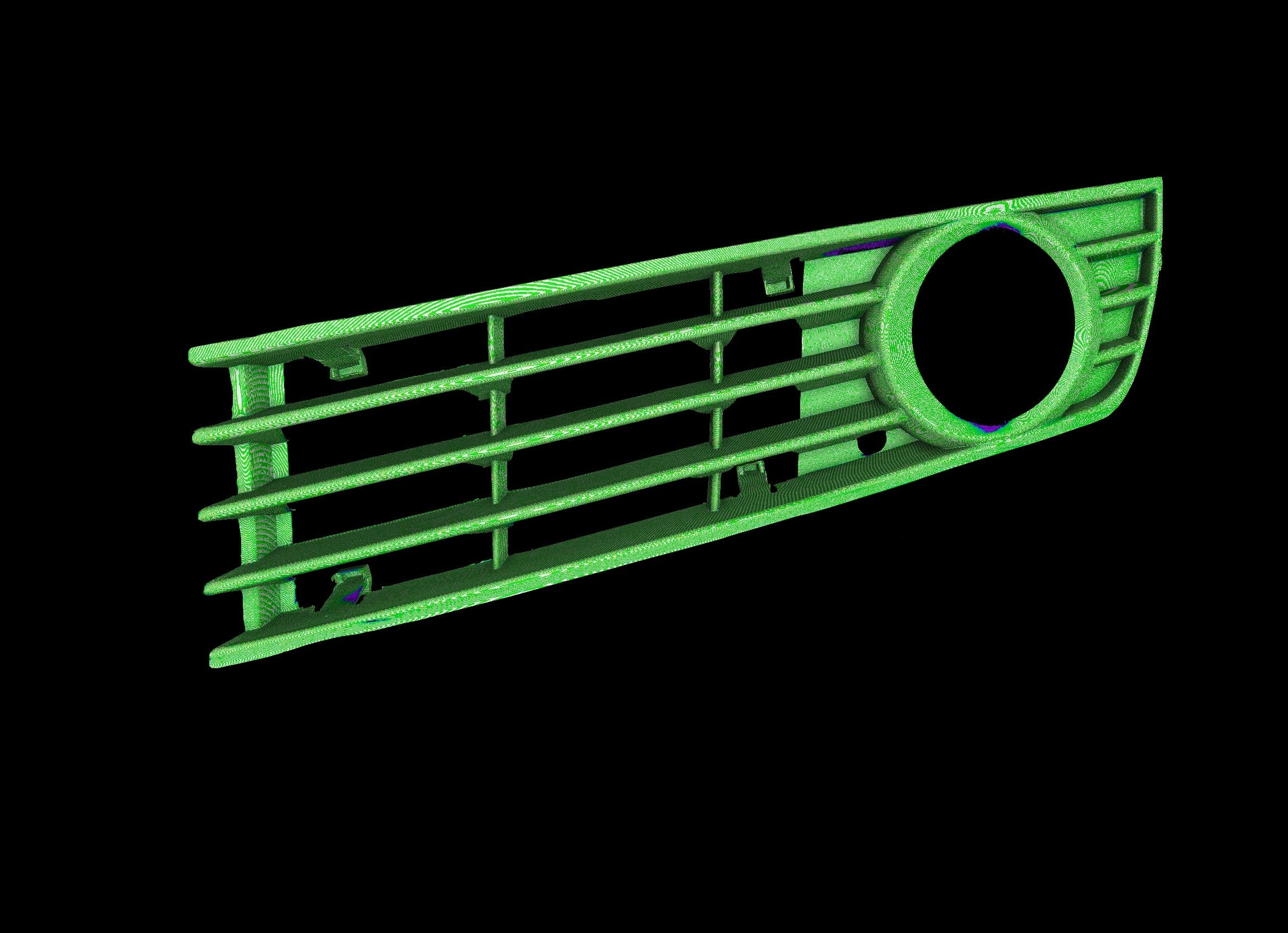
For Nikon's November Scan of the Month, Samir Kadi, Application Engineer X-ray & CT, performed a scan of a plastic fog light.
Context and challenge
Plastic materials are widely used in automotive fog lights for several practical reasons:
- Durability: plastic materials used in fog lights, such as polycarbonate, are highly durable and impact-resistant compared to glass. This durability helps prevent damage caused by road debris, stones and other hazards.
- Weight reduction: plastic is significantly lighter than glass. The use of plastic in fog lights contributes to reducing the overall weight of the vehicle, helping to improve fuel efficiency and dynamic behavior.
- Cost-effectiveness: plastic components are generally more economical to manufacture and replace than glass ones, making them more advantageous for both manufacturers and consumers.
- Design flexibility: plastic can be easily molded into different shapes and geometries, allowing greater creative freedom in fog light design. This flexibility enables improvements in both the aesthetics and functionality of the lights.
- Safety: in the event of a collision, plastic fog lights are less likely to shatter into sharp pieces than glass ones, reducing the risk of injury to vehicle occupants and pedestrians.
- UV and environmental resistance: modern plastic materials are often treated to resist UV radiation and other environmental factors, ensuring that fog lights remain transparent and functional over time, without yellowing or becoming brittle.
If you want to learn more about the various components inside the fog light assembly, read our Scan of the Month for March.
The solution or technology
X TH 225 ST 2x
These X-ray tomographies were acquired using Nikon's Offset CT acquisition algorithm, with an X-ray power of 80 W and a voxel resolution of 84 µm, using a Nikon X TH 225 ST 2x system.
This system is equipped with up to three Nikon microfocus X-ray sources: a 180 kV / 20 W transmission target, a 225 kV / 225 W reflection target and a 225 kV / 450 W Rotating.Target 2.0.
The scan was performed using the 225 kV Rotating.Target 2.0 source, coupled with a Varex XRD 4343CT flat panel detector. The detector acquired 8,152 projections (4 frames per projection) with an exposure time of 500 ms and a gain of 6 dB, resulting in a total scanning time of 4 hours and 30 minutes.
This detailed work required a longer scanning time than more typical X-ray computed tomography scans performed with Nikon technology, which can take as little as 1 minute, depending on the number of projections configured.