
As industrial processes evolve and equipment becomes larger, more complex and increasingly demanding from a geometric perspective, the need to perform accurate measurements directly within production environments has become an increasingly important factor in ensuring quality, operational efficiency and predictability in industrial assembly processes.
For many years, a significant portion of dimensional control operations was associated with metrology laboratories equipped with Coordinate Measuring Machines (CMMs) installed in controlled environments. These solutions continue to play an essential role in high-precision applications, especially for small and medium-sized parts. However, in industrial applications involving large structures, heavy equipment or systems assembled directly in factories or in the field, traditional methods present significant operational limitations.
Industries such as aerospace, energy, railway, shipbuilding, heavy machinery, metalworking and manufacturing frequently work with large-scale structures that cannot easily be moved into a metrology room. Large industrial components often require measurement processes to be carried out directly at the installation site, within real production or maintenance environments.
In these contexts, the challenge is not only related to the physical size of the structures, but also to the need to ensure high geometric accuracy under complex industrial conditions. Vibrations, thermal variations, limited accessibility and the need for operational speed become critical factors in ensuring reliable measurements that are useful for technical decision-making.

Additionally, in large-volume industrial applications, dimensional control goes far beyond simply verifying isolated measurements. Many operations require validation of alignments, relative positioning, parallelism, concentricity and geometric references between different industrial subassemblies.
Small geometric deviations can generate significant problems during later assembly, installation or operational phases. A minor misalignment in large industrial equipment may cause premature wear, unwanted structural stresses, assembly difficulties or reduced operational performance.
In critical sectors such as energy, aerospace or industrial machinery, geometric errors detected too late may result in high rework costs, operational delays and production downtime. For this reason, the ability to perform accurate measurements directly within industrial environments has become a strategic factor for ensuring efficiency and reducing technical risk.
It is within this context that portable metrology systems and laser trackers play an increasingly important role in modern industry.
Laser trackers represent one of the most advanced technologies for large-volume three-dimensional measurement. These systems make it possible to measure spatial coordinates with high precision across large structures while simultaneously maintaining operational mobility and flexibility for use in industrial environments.
The operating principle of a laser tracker is based on the continuous tracking of a reflector positioned at different points on the structure being measured. The system automatically follows the reflector’s movement and calculates three-dimensional coordinates with a high level of precision, even across considerable distances.
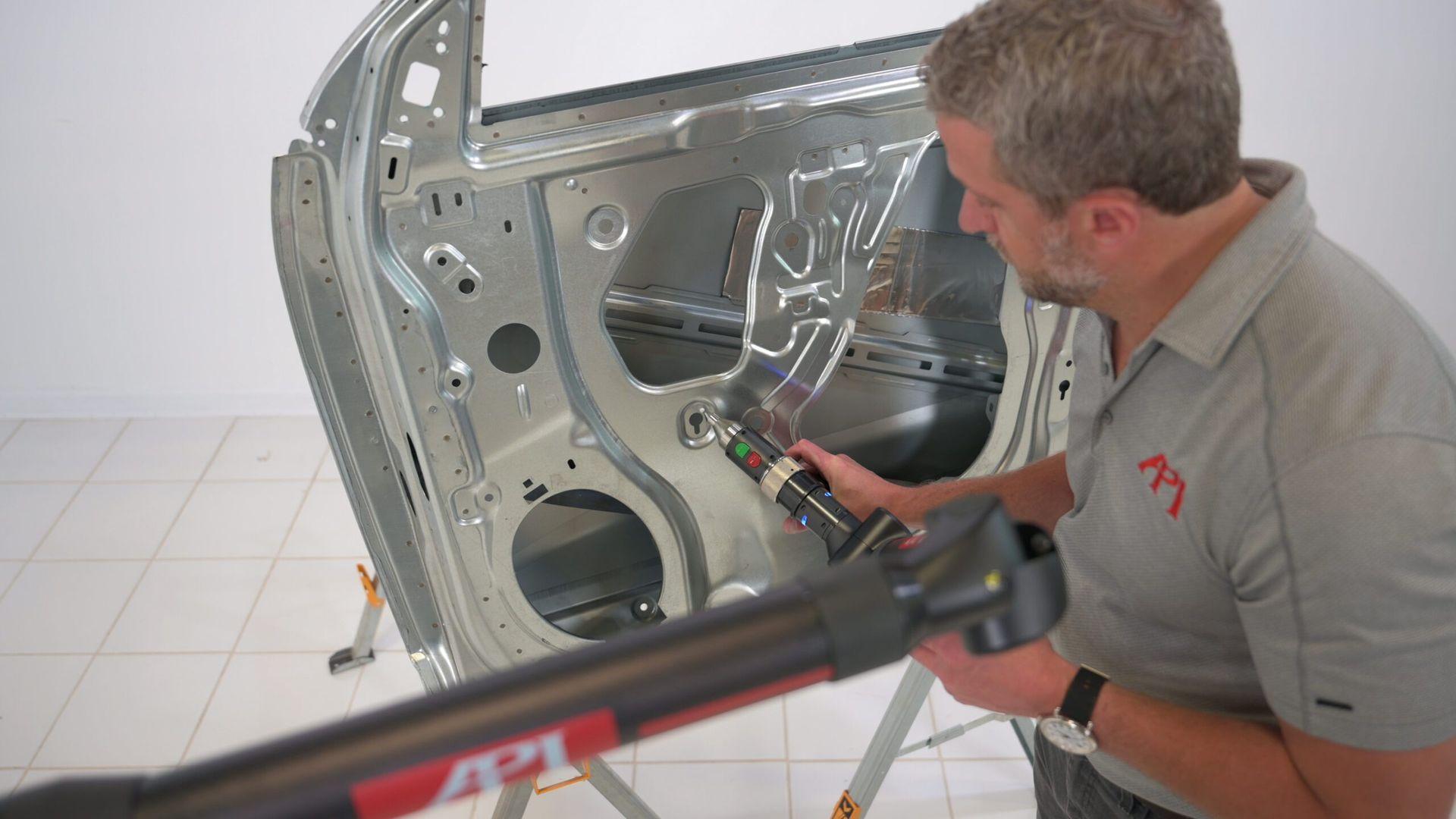
This capability allows extremely accurate measurements to be performed in applications where conventional laboratory equipment would be impractical. Unlike fixed metrology solutions, laser trackers can be transported directly to factories, production lines or field operations, bringing measurement processes closer to production activities themselves.
One of the major advantages of this approach is precisely the combination of metrology accuracy and operational mobility. In large-scale industrial applications, the ability to measure directly on-site significantly reduces installation, disassembly and geometric verification times.
Laser tracker systems are widely used in industrial alignment operations, metallic structure assembly, production line installation, geometric validation of aerospace subassemblies, industrial equipment positioning and dimensional control of large components.
In modern industrial environments, these technologies make it possible to quickly verify critical geometric references and validate positioning with a high degree of precision. This becomes particularly important in industrial assembly operations, where different subassemblies must be correctly aligned to ensure the proper functioning of the final system.
In the aerospace industry, for example, laser trackers are frequently used in fuselage structure assembly, tooling alignment and geometric validation of complex subassemblies. In the energy industry, these technologies support installation and alignment operations for turbines, generators and large industrial equipment.
Another important application scenario is industrial maintenance. In equipment subject to mechanical wear or deformation over time, the ability to measure directly in the field allows the geometric condition of structures to be evaluated and supports corrective and preventive maintenance operations.
Beyond high precision, measurement speed is another critical factor in these applications. In many industrial projects, especially during installation or maintenance phases, technical teams require rapid results in order to make immediate decisions within operational environments.
Portable metrology provides exactly this level of speed and flexibility. By bringing measurement processes closer to the production environment, it becomes possible to reduce geometric verification times and improve the responsiveness of engineering and maintenance teams.
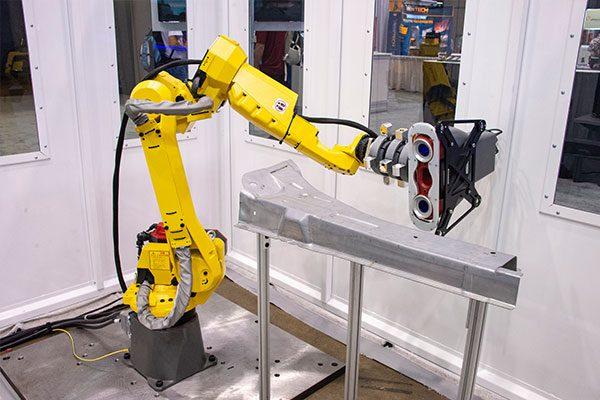
Another important aspect of these technologies is the possibility of integration with digital dimensional analysis platforms and advanced metrology software. When combined with geometric analysis tools, the data captured by laser trackers can be used to compare real structures against CAD models, identify geometric deviations and generate detailed technical reports.
This integration makes it possible to transform three-dimensional measurements into useful information for quality control, assembly engineering, industrial maintenance and process optimization.
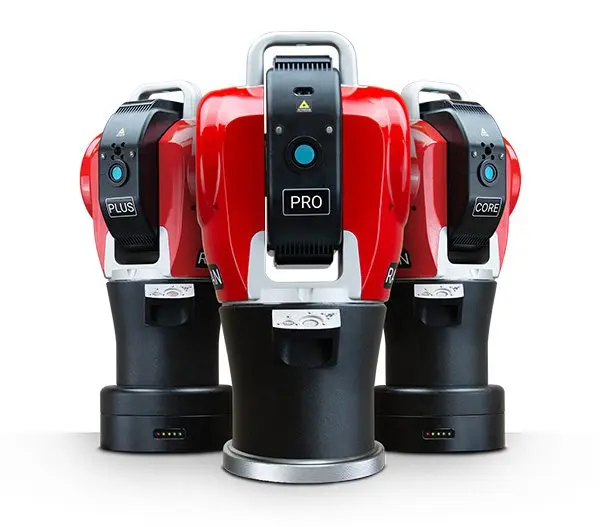
In this context, laser tracker solutions developed by API Metrology have gained increasing prominence in industrial applications requiring high precision across large volumes. API Metrology systems are designed to meet the demands of complex industrial environments by combining dimensional accuracy, operational robustness and high mobility.
The flexibility of these systems allows them to be used in different industrial scenarios, ranging from alignment and installation operations to geometric validation of critical structures and dimensional control of large equipment.
Another important factor is the ability of these solutions to adapt to different working conditions. In many cases, measurements must be performed directly in factories or in the field, where environmental conditions may vary significantly compared to conventional metrology laboratories.
API Metrology solutions were specifically developed to address these challenges, enabling reliable measurements to be performed in real industrial environments and supporting production processes where mobility and operational speed are essential.
In this context, companies specialized in industrial metrology, such as NM3D IBERICA, support organizations in implementing advanced portable measurement and industrial alignment solutions. Through the integration of API Metrology laser tracker technologies, NM3D IBERICA helps companies validate large structures, reduce geometric risks and increase the efficiency of installation, assembly and industrial maintenance processes.
Experience in defining measurement strategies adapted to large-volume applications makes it possible to select methodologies suited to each project, ensuring that geometric validation processes are carried out efficiently and aligned with industrial operational requirements.
In an increasingly demanding industrial context, where geometric accuracy, responsiveness and operational mobility are critical factors, laser tracker systems play a central role in the evolution of industrial metrology.
As industrial structures become larger, more complex and more integrated, the ability to perform highly accurate three-dimensional measurements directly within production environments will continue to be a fundamental element for ensuring quality, operational efficiency and predictability across industrial processes.
Request a technical demonstration or contact us to evaluate how this technology can be applied to your industrial process.